


Objective
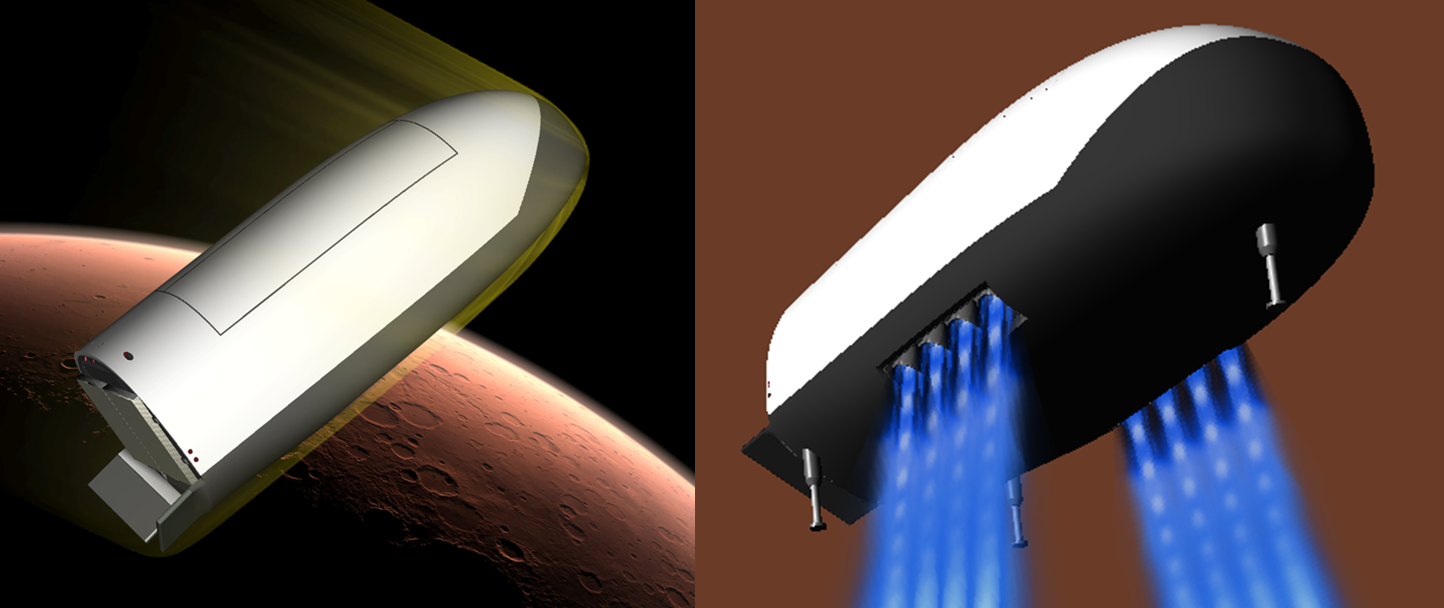
Mature and test Sequential Convex Programming-based technologies for end-to-end 6-DoF multiphase entry, descent and landing scenarios. The study adopts the NASA Cobra-MRV as benchmark and is carried forward in cooperation with San Diego State University.
Approach
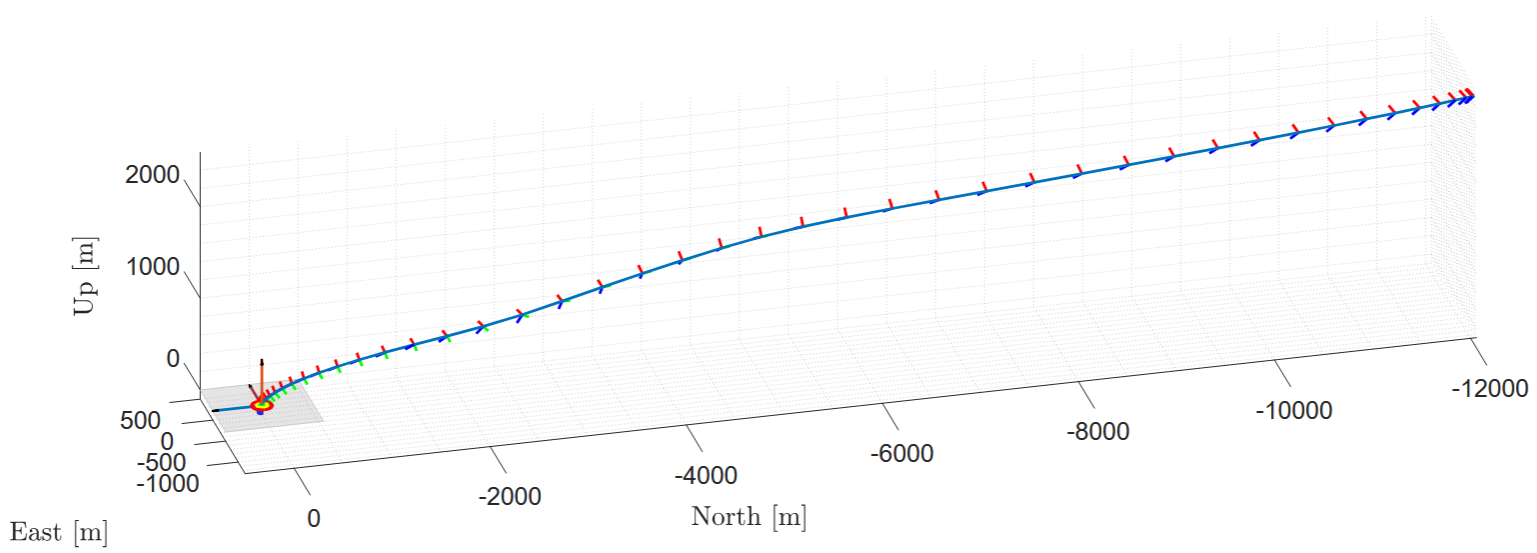
The problem is solved by developing a highly-flexible multi-phase, Hybrid Sequential Pseudospectral Convex Programming (HSPCP) approach, able to deal with arbitrary number of states and controls in each phase independently, as well as complex inter-phase conditions and different representations of the equations of motion.
Why It Matters
These problems can be very hard to solve with state-of-the-art approaches. The proper exploitation of the proposed methodology can bring the analysis of a mission scenario down from days or hours to tens of seconds, effectively simplifying the analysis of a big number of scenarios in a reduced amount of time.