


The Problem
Spaceflight, whether towards the Moon, or Mars, or to land back on a droneship in the Atlantic, has to cope with uncertainties.
Classical guidance methods either burn too much margin playing it safe, or cut it fine and hope the model was right. Neither scales to the cadence of reusable launch or the ambition of crewed planetary landings.
What STARGATE Does
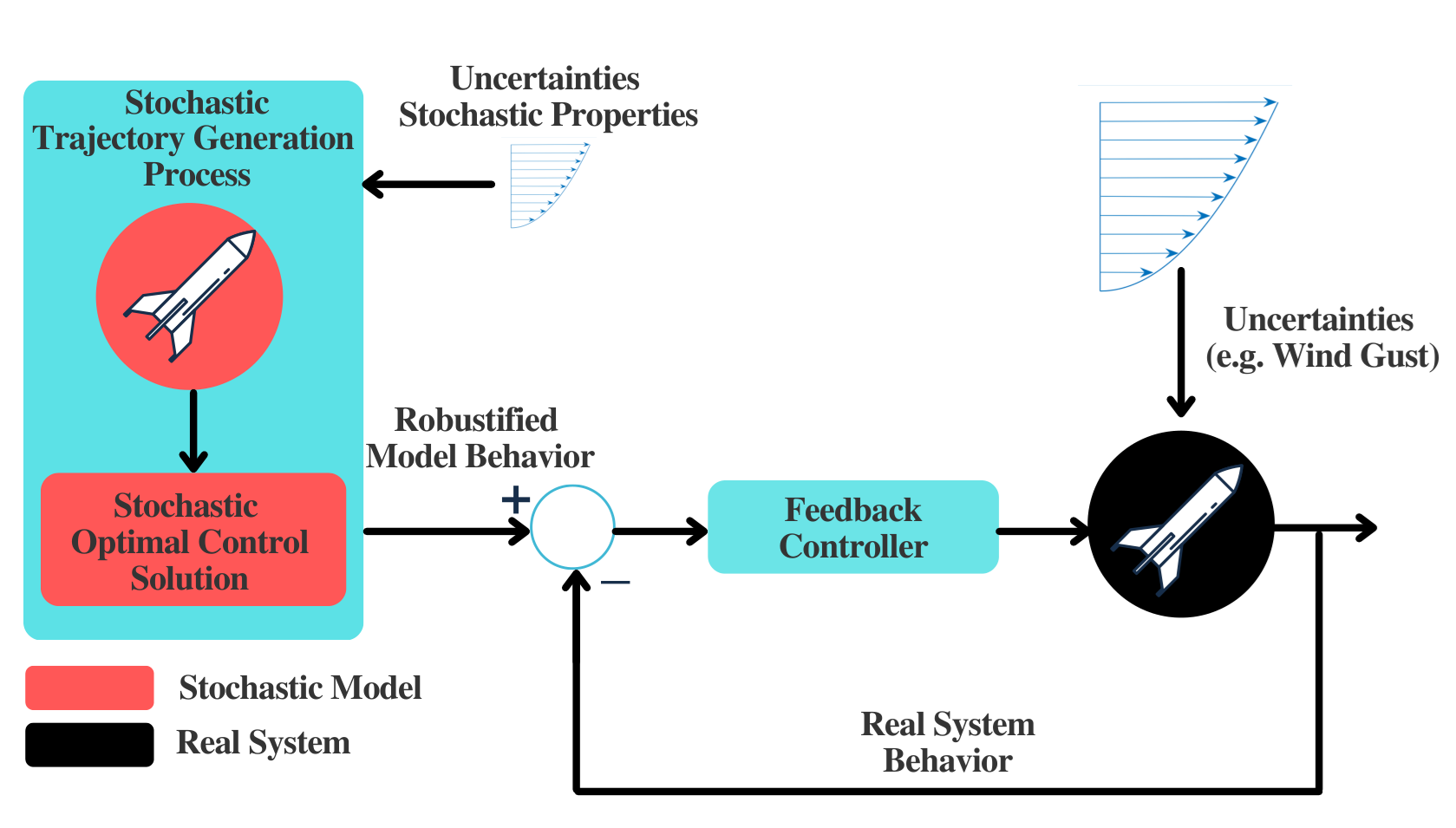
STARGATE develops the mathematical and computational backbone for guidance systems that can rapidly plan optimal trajectories onboard accounting for real uncertainties. The objective can be pursued by combining and further enhancing multiple technologies, such as Pseudospectral Methods, Convex Optimization, and Consensus formulations. The project will focus on
- Entry, descent, and landing (EDL) guidance, Proximity Operations, as well as Low-thrust scenarios.
Why It Matters
The difference between a mission that lands and one that doesn’t often comes down to margin — propellant margin, timing margin, robustness margin. STARGATE’s work feeds directly into that margin: tighter guidance means more payload, more landing opportunities, and more missions that come home to fly again.